
The BCCI had been vehemently opposed to signing up with NADA, claiming that it is an autonomous body, not a National Sports Federation and does not rely on government funding.

BCCI has said that government body has no jurisdiction to conduct dopes tests on Indian cricketers.

National Anti-Doping Agency (NADA) Director-General Anant Kumar highlighted the need for a collective effort from all stakeholders in the Indian sports ecosystem to reduce doping incidents. He made these remarks during a National Roundtable on Doping Prevention in Sports, which discussed various factors contributing to doping and strategies for prevention.

The Parliament on Wednesday passed a bill which seeks to provide a statutory framework for the functioning of the National Anti-Doping Agency and the National Dope Testing Laboratory.
A 17-year-old Indian swimmer, who had qualified for two events at the Asian Games, has been suspended for 18 months after testing positive for terbutaline, a banned substance. The suspension means he will miss the upcoming continental event in Aichi-Nagoya, Japan, starting September 19.
Proposed amendments to the National Anti-Doping Act in India could significantly alter enforcement procedures, granting officers greater authority to search and detain individuals suspected of involvement with banned substances.
The Wrestling Federation of India (WFI) has issued a strict anti-doping advisory after several Indian wrestlers, including two Asian Games selections, were implicated in doping and whereabouts violations. The cases, involving substances like Mephentermine and Stanozolol, have led to exclusions from major competitions and highlight a lack of awareness among athletes regarding anti-doping rules and personal responsibility.
Former Asian Games gold-winning heptathlete Swapna Barman has been provisionally suspended by the National Anti Doping Agency (NADA) after testing positive for the banned anabolic-androgenic steroid Boldenone. Barman, who recently announced her retirement, won gold at the 2018 Jakarta Asian Games and represented India in the 2016 Olympics.
An Indian swimmer, who had qualified for the Asian Games, has been suspended for 18 months after testing positive for terbutaline, a banned substance. This suspension means the 17-year-old will miss the upcoming continental event in Aichi-Nagoya, Japan, despite his twin brother being part of the team.
World Anti-Doping Agency (WADA) President Witold Banka is in Delhi for discussions with NADA officials regarding India's increasing doping cases. He is expected to address the issue in a press conference.
World Anti-Doping Agency President Witold Banka is in India to discuss the implementation of effective anti-doping measures with sports minister Mansukh Mandaviya and other officials, following concerns about India's high doping numbers.
Afghanistan's anti-doping programme has collapsed since the Taliban's return to power, with no tests conducted for three years and the country's exiled anti-doping chief admitting there is currently 'no hope'. The programme faces numerous challenges, including a lack of Doping Control Officers, logistical issues, and political instability.

Indian judoka Arun Kumar has been withdrawn from the Glasgow Commonwealth Games after failing an out-of-competition dope test. He has received a provisional suspension from NADA, reducing India's contingent size.
Indian judoka Arun Kumar has been withdrawn from the Glasgow Commonwealth Games after failing an out-of-competition dope test. He has received a provisional suspension from NADA, reducing India's contingent size.

Birmingham Commonwealth Games silver-medallist judoka Tulika Maan has been provisionally suspended by the National Anti-Doping Agency (NADA) for three whereabouts failures, leading to her withdrawal from the ongoing Glasgow edition. This comes after another judoka, Arun Kumar, was also withdrawn for a dope test failure.
Ankit of Services Sports Control Board and Jayesh Patil of Railways have been banned for three years by NADA after testing positive for meldonium. Both athletes accepted the charges, resulting in a one-year reduction in their period of ineligibility.
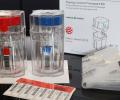
NADA Chairman Anant Kumar highlights the importance of education in combating doping, acknowledging the evolving nature of the threat and the need for constant upgrades in monitoring mechanisms.

Indian judoka Arun Kumar has been withdrawn from the upcoming Glasgow Commonwealth Games after failing an out-of-competition dope test. He tested positive for an anabolic steroid and has been provisionally suspended by NADA, reducing India's judo contingent.

India's first Asian Games gold-winning heptathlete, Swapna Barman, has been provisionally suspended by NADA after testing positive for the banned substance Boldenone. This disciplinary action proceeds despite her recent retirement announcement. The case highlights ongoing efforts to combat doping in Indian sports, with other athletes also facing bans.

Discus thrower Banvir Singh has been banned for seven years by the National Anti-Doping Agency's Appeal Panel (ADAP) for failing a dope test. The ADAP enhanced the ban period, adding two years to the original punishment. Long distance runner Harendra Kumar has also been handed another four-year suspension.

Former Asian silver medallist and Olympian javelin thrower Shivpal Singh has been suspended for 10 years by NADA for a second doping offence involving methandienone, potentially ending his career. This follows a previous ban in 2022 which was reduced to one year after he claimed contaminated supplements.
WADA President Witold Banka acknowledges India's doping problem but recognises sincere efforts to address it, including participation in Operation Upstream.
India's National Anti-Doping Agency (NADA) has provisionally suspended 24 athletes across various sports, including cricketer Bhupen Lalwani, weightlifter Ajith Narayana, wrestler Sahil Jaglan, and national record holder runner KM Deeksha, for failing dope tests. The suspensions highlight ongoing challenges with doping in Indian sports.

WADA president Witold Banka, who was in India last week, called the easy availability of performance-enhancing drugs in the country a "serious problem", and met senior officials of India's federal police seeking help to disrupt supply chains.
India is developing legislation to criminalise the trafficking and administration of performance-enhancing drugs to athletes, aiming to combat doping and uphold sports integrity.
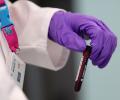
Greco Roman wrestler Deepak has failed a dope test, leading to his withdrawal from the Asian Games contingent. This marks the third doping case for Indian wrestling ahead of the continental event, further reducing India's representation. The National Anti-Doping Agency (NADA) found clomifene in his sample, a prohibited substance. The Wrestling Federation of India (WFI) decided to withdraw him to avoid potential penalties from the world governing body.
Commonwealth Games silver medallist Tulika Maan has been provisionally suspended by NADA for three whereabouts failures, leading to her withdrawal from the ongoing Glasgow edition. She faces a potential two-year ban, making her the second Indian judoka pulled from the Games due to anti-doping violations.
India's National Anti-Doping Agency (NADA) has issued a second three-year suspension to sprinter Shashikesh Kumar for competing while already banned. Several other track and field athletes, weightlifters, and wrestlers have also received bans ranging from one to five years for doping violations.
India has been designated as a country with an 'extremely high' risk of doping by World Athletics, leading to more stringent anti-doping measures for Indian athletes.

The International Testing Agency (ITA) has voiced concerns regarding the high rate of doping cases in India and the alleged practice of athletes receiving advance notice before testing, potentially jeopardising the nation's bid to host the 2036 Olympic Games.
Kenya's anti-doping agency says an Indian national was caught with "an illegal consignment of assorted performance enhancing substances" during a recent raid on prohibited drugs, conducted in collaboration with the country's Directorate of Criminal Investigations (DCI).

The National Anti-Doping Agency (NADA) achieved a significant success with a tip-off leading to the confiscation of prohibited substances, including anabolic steroids, in Najafgarh, following a joint operation with local police and food safety officials.
The National Anti-Doping Agency (NADA) Director General Anant Kumar has emphasised the importance of education as the primary defence against doping, acknowledging the evolving nature of the problem and the need for constant upgrades in monitoring mechanisms.

Many federations and former athletes alike have been calling for an anti-doping legislation to implement the existing rules.
India is set to amend its National Anti-Doping Act to criminalise the trafficking and distribution of prohibited substances to athletes, with potential jail terms for suppliers, including medical practitioners who knowingly prescribe banned drugs. The amendments are open for public feedback until June 18 and are expected to be tabled in the monsoon session of Parliament.
World Anti-Doping Agency (WADA) director-general David Howman has credited India for its efforts at closely monitoring the dope menace among its athletes.

The National Sports Governance Bill was on Tuesday passed by the Parliament with Rajya Sabha giving its nod a mere 24 hours after Lok Sabha.

Junior Commonwealth gold medallist Sairaj Pardeshi faces a provisional doping ban after testing positive, while alleging a conspiracy to sabotage his career.

National Games gold medallist Jasmine Kaur has been banned for two years after testing positive for a prohibited substance. The NADA's Anti-Doping Disciplinary panel (ADDP) found her guilty of using Terbutaline.
The Athletics Federation of India (AFI) has announced that athletes who fail to participate in the National Senior Athletics Federation Cup without a valid reason may be barred from future events.
